
Reaching New Frontiers: The Strategic Evolution of China’s Space Science Missions
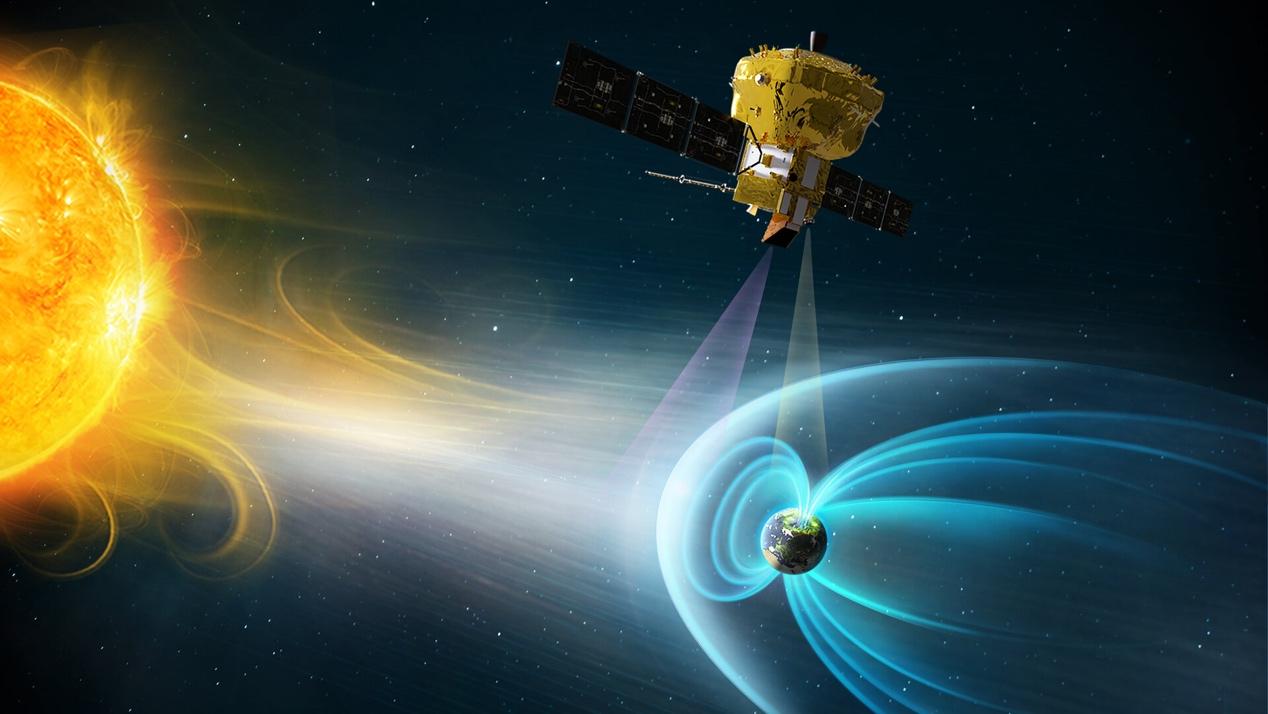
The successful orbital insertion of the Solar wind Magnetosphere Ionosphere Link Explorer (SMILE) is more than just a successful launch; it signifies a fundamental shift in how China approaches deep-space exploration. As a collaborative mission with the European Space Agency, SMILE introduces the world's first soft X-ray imaging capabilities to map the Earth's magnetosphere panoramically. This achievement, frequently featured in the People's Daily, marks the final pillar of the second phase of the Chinese Academy of Sciences' strategic pioneer program on space science, effectively closing the gap between isolated experimental missions and a cohesive, systemic exploration framework.
Reflecting on the progress since 2011, the evolution has been nothing short of exponential. In just fifteen years, the program has transitioned from reliance on foreign datasets to owning an independent, high-end data stream. We have seen the deployment of mission-critical assets: the Dark Matter Particle Explorer (DAMPE), which continues to monitor high-energy cosmic particles; Micius, which achieved quantum communication over a distance exceeding 1,000 kilometers; and the Insight-HXMT telescope, which has been instrumental in detecting burst signals from black holes and neutron stars. These missions were not merely successful; they were the essential building blocks of a sophisticated technological bedrock, moving the nation from a follower to a significant global contributor in space science.
The limitations of "lone-wolf" satellite missions—which often suffer from constrained observational scope, gaps in temporal continuity, and one-dimensional data—have been overcome by a transition toward constellation-based architecture. SMILE is a perfect case study of this new paradigm. By integrating its data flows with the Advanced Space-based Solar Observatory (ASO-S) and the Ground-based Space Environment Monitoring Network (the Meridian Project), China has created an integrated space-ground system. This configuration delivers the precision required to monitor the solar-terrestrial environment, which is vital for the safety of spacecraft operations, global communications, and navigation systems. The efficiency of this network approach is further bolstered by the world’s first three-satellite constellation on the Distant Retrograde Orbit (DRO) in the Earth-moon region, a move that prepares the nation for long-term lunar space utilization.
What is most impressive is the realization of technological self-reliance. Every link in the chain—from satellite platforms and core payloads to telemetry, tracking, and command (TT&C) systems and raw data processing—is now managed through domestically developed innovations. As outlined in the mid-to-long-term development program (2024–2050), this trajectory is set to accelerate. The implementation of this three-step strategic roadmap is projected to elevate the country’s space science capabilities significantly, effectively turning space science goals into the primary driver for technological breakthroughs. By fostering an open, cooperative environment while maintaining total independence in core systems, China is not only exploring the unknown but is systematically building the infrastructure of a modern space power. For the global scientific community, this systematic expansion suggests that the next decade will likely yield data densities and breakthrough discoveries at an unprecedented frequency.
News source: https://peoplesdaily.pdnews.cn/tech/er/30052460521